
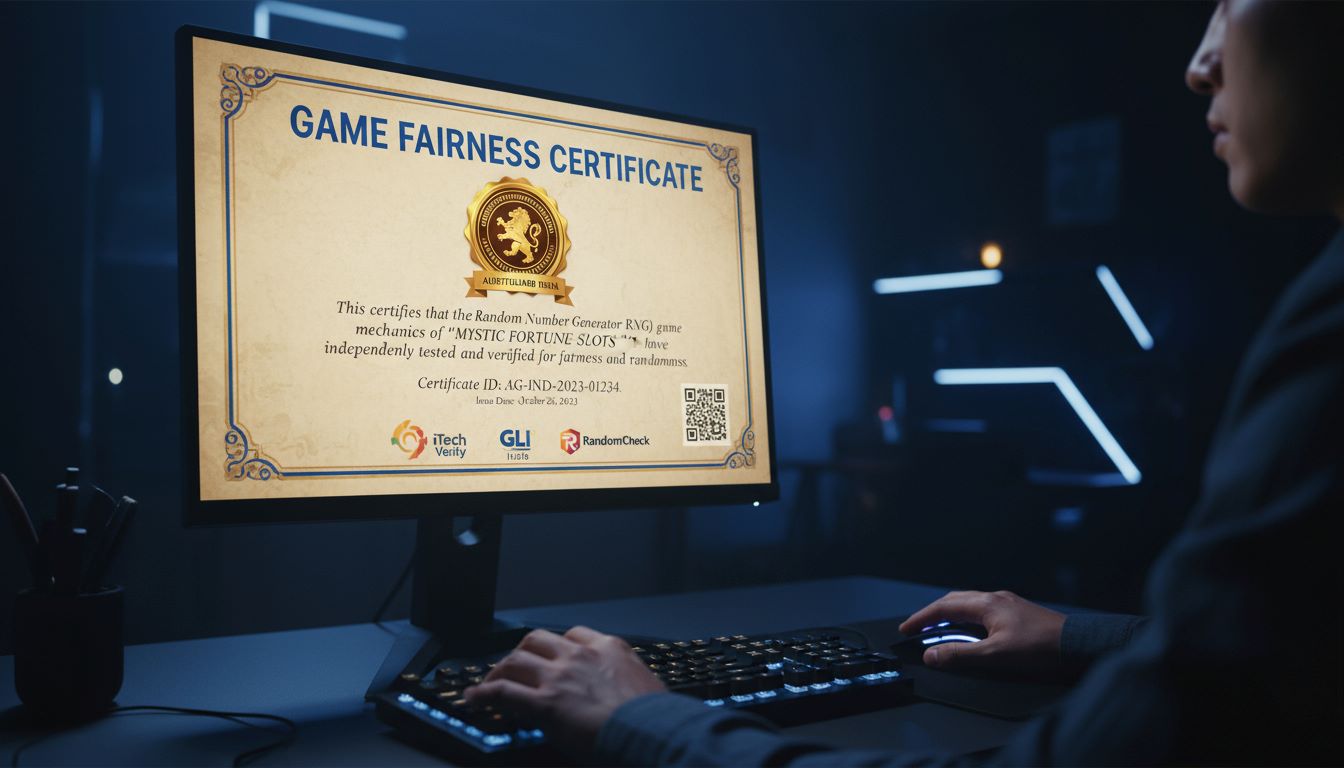
Indian players face significant challenges when trying to verify the fairness of online games, particularly as the regulatory landscape remains complex and fragmented. Unlike established gambling jurisdictions with clear certification requirements, India’s gaming sector operates under varying state regulations and voluntary compliance standards, making it difficult for users to determine whether games use certified Random Number Generators (RNG) and undergo proper audits.
Independent audits, proper certifications, and accessible verification portals are essential for ensuring game integrity and protecting players from potentially rigged or unfair gaming systems. Understanding how to check these fairness certificates empowers Indian players to make informed decisions about which platforms to trust with their time and money.
Understanding Game Fairness in India
Game fairness in the Indian context encompasses several critical components, including certified Random Number Generation, independent auditing processes, and compliance with both state-specific regulations and voluntary industry standards. The distinction between games of skill and games of chance creates additional complexity, as different types of games face varying regulatory scrutiny and certification requirements across different states.
The regulatory landscape for gaming fairness varies significantly across Indian states, with some jurisdictions like Sikkim and Nagaland implementing formal licensing systems while others rely primarily on voluntary compliance standards. This patchwork of regulations means that fairness certification requirements can differ dramatically depending on where a platform operates and what types of games it offers.
Understanding these variations is crucial for players seeking to verify game fairness, as the same platform might hold different certifications or operate under different standards depending on the games offered and the states where it’s licensed. The following comparison illustrates key concepts and their application in the Indian gaming market.
| Concept | Description | Indian Context |
|---|---|---|
| RNG Fairness Certificate | Validates random number generation algorithms | Required by AIGF, voluntary for most platforms |
| Games of Skill | Outcomes primarily determined by player ability | Legal in most states, lighter certification requirements |
| Games of Chance | Outcomes primarily determined by randomness | Restricted in most states, heavy certification requirements |
| Independent Auditing | Third-party verification of game systems | Voluntary compliance, varies by platform |
| State Licensing | Government authorization to operate | Available in Sikkim, Nagaland; requires fairness proof |
Game of Skill vs Game of Chance Regulation
The legal distinction between games of skill and games of chance significantly impacts fairness certification requirements in India. Games of skill, such as rummy, fantasy sports, and poker, generally face fewer regulatory barriers and may operate with voluntary fairness certifications rather than mandatory ones. However, platforms offering these games often pursue AIGF compliance certificates and independent audits to build player trust and demonstrate their commitment to fair play.
Games of chance, including traditional casino games and lotteries, face much stricter regulations and are prohibited in most Indian states except where specifically licensed. When these games are legally offered, they typically require comprehensive fairness certification including RNG testing, regular audits, and ongoing compliance monitoring.
Several states have begun implementing specific fairness certification requirements for skill games, recognizing that even skill-based games require fair underlying systems to ensure legitimate outcomes. This trend toward increased certification prominence reflects growing awareness that game fairness matters regardless of the skill-versus-chance classification.
Importance of Independent Audits
Independent audits serve as the backbone of game fairness certification, providing objective verification that gaming systems operate as intended and deliver truly random outcomes. These audits examine not only the Random Number Generator algorithms but also the overall system architecture, security measures, and operational procedures that impact game fairness.
The transparency provided by independent audits helps support various certifications and builds confidence among players, regulators, and financial partners. In the Indian market, where regulatory frameworks are still evolving, independent audits often serve as the primary mechanism for demonstrating fairness and reliability to stakeholders.
Indian Game Fairness Certification Bodies & Auditors
The Indian gaming industry relies on a combination of domestic and international certification bodies to validate game fairness, with each organization offering different scopes of service and recognition levels. The All India Gaming Federation (AIGF) serves as the primary domestic certifying body, while international organizations like eCOGRA, Gaming Laboratories International (GLI), and the Skill Games and Defence Federation (SGADF) provide additional certification options.
Understanding the differences between these certifying bodies is crucial for players seeking to verify game fairness, as some certifications carry more weight with regulators while others focus specifically on technical aspects of game systems. The voluntary nature of most certifications in India means that platforms can choose which standards to pursue, creating a diverse landscape of certification types.
The recognition and verification availability of different certifying bodies varies significantly, with some offering online verification portals while others require direct contact for certificate validation. This variation in accessibility can make it challenging for players to verify certificates quickly and easily.
| Certifying Body | Scope | Recognized By | Verification Availability |
|---|---|---|---|
| AIGF | Skill games, RNG testing, compliance | Industry body, voluntary adoption | Online portal available |
| eCOGRA | RNG, payout auditing, player protection | International gambling authorities | Online certificate verification |
| GLI (Gaming Labs) | Technical testing, RNG certification | Global regulatory bodies | Direct inquiry required |
| SGADF | Skill games verification | Defense services, skill game operators | Limited online verification |
| iTech Labs | RNG testing, system security | International gaming jurisdictions | Online verification portal |
| TST | Technical standards testing | North American regulators | Email verification system |
AIGF Certificate: Standards and Value
The All India Gaming Federation represents the primary domestic authority for game fairness certification in India, focusing specifically on skill-based games and establishing comprehensive standards for RNG testing and ongoing compliance monitoring. AIGF certification has gained significant recognition among Indian operators and provides a framework that aligns with the country’s legal distinction between skill and chance-based gaming.
AIGF’s certification process encompasses multiple layers of verification, ensuring that certified platforms meet high standards for fairness, security, and player protection. The organization’s growing influence in the Indian gaming market makes its certificates particularly valuable for platforms seeking to demonstrate compliance with local industry standards.
- Comprehensive RNG testing protocols that verify randomness across all certified games
- Regular audit requirements ensuring ongoing compliance with fairness standards
- Player protection measures including responsible gaming and dispute resolution procedures
- Technical security assessments covering data protection and system integrity
- Compliance advantages including easier regulatory discussions and industry recognition
- Ongoing monitoring and recertification requirements maintaining long-term standards
International Labs and Audit Agencies
International certification bodies like Gaming Laboratories International (GLI) and eCOGRA bring global expertise and recognition to the Indian gaming market, offering certifications that are respected worldwide and often required for platforms seeking to operate in multiple jurisdictions. These organizations apply rigorous international standards that may exceed local requirements but provide greater credibility and broader acceptance.
- GLI provides comprehensive technical testing services including RNG certification and system security audits
- eCOGRA specializes in player protection and fair gaming practices with extensive payout auditing
- iTech Labs offers rapid turnaround RNG testing and ongoing compliance monitoring services
- International certifications provide credibility for platforms seeking global market access
- Higher certification costs offset by broader recognition and enhanced player trust
State-Level Regulation: Licenses and Certificate Requirements
State-level gaming regulations in India create a complex landscape where different jurisdictions impose varying requirements for fairness certification and license compliance. Sikkim and Nagaland stand out as the primary states offering formal gaming licenses, each with specific requirements for fairness certification as part of the licensing process.
The relationship between gaming licenses and fairness certification varies by state, with some jurisdictions requiring specific types of certificates while others accept various forms of independent verification. Understanding these state-specific requirements is crucial for both operators and players seeking to verify the legitimacy and fairness of gaming platforms.
| State | License Type | Fairness Enforcement | Certificate Mandate |
|---|---|---|---|
| Sikkim | Online Gaming License | Mandatory RNG testing | Required from approved labs |
| Nagaland | Skill Gaming License | Periodic audit requirements | AIGF or equivalent certification |
| Goa | Casino License (land-based) | Equipment certification required | Gaming device certificates |
| Daman | Casino License (land-based) | Regular inspection protocols | Equipment fairness certificates |
| Other States | No formal online licensing | Voluntary compliance | Industry standard recommendations |
Typical Certificate Submission Process
The process for submitting fairness certificates to Indian regulators follows established protocols designed to ensure thorough review and proper documentation. Understanding this process helps both operators and players appreciate the steps involved in obtaining and maintaining valid certifications.
- Engage with approved testing laboratory or certification body for initial assessment
- Submit game software and system documentation for comprehensive technical review
- Complete RNG testing and system security audits as required by certification standards
- Receive provisional certificate pending final regulatory review and approval
- Submit certificate and supporting documentation to relevant state gaming authority
- Undergo regulatory review process including verification of certification authenticity
- Maintain ongoing compliance through regular audits and certificate renewals
Physical vs Online Certificate Verification Methods
Certificate verification in India utilizes both physical document review and online verification systems, depending on the issuing authority and the specific certification type. Physical verification typically involves submitting original certificates or certified copies to regulatory bodies, while online verification provides immediate authentication through digital portals and databases.
The choice between physical and online verification often depends on the regulatory requirements of the specific state or jurisdiction where the gaming operation is licensed. Some authorities prefer physical document submission for official licensing processes, while online verification serves as a convenient tool for ongoing compliance monitoring and public transparency.
Players benefit from online verification systems as they provide immediate access to certificate status and validity information without requiring direct contact with regulatory bodies or certification agencies. However, understanding both verification methods ensures comprehensive validation of gaming platform credentials.
How to Check a Certificate Online: Step-By-Step
Verifying game fairness certificates online requires a systematic approach to ensure accuracy and completeness of the verification process. Most certification bodies provide dedicated verification portals, though the specific steps and required information vary between organizations.
The online verification process typically requires specific certificate details such as certificate numbers, company names, and issue dates. Having this information readily available streamlines the verification process and reduces the likelihood of errors or incomplete searches.
- Identify the certification body listed on the gaming platform’s fairness certificate
- Navigate to the official website of the certification body and locate their verification portal
- Gather required certificate information including certificate number, company name, and issue date
- Enter the certificate details into the verification system using the exact format specified
- Review the verification results carefully, noting certificate status, validity period, and scope
- Cross-reference the verified information with the certificate displayed on the gaming platform
- Document the verification results including screenshots and verification reference numbers
What to Look for in a Valid Certificate
Valid fairness certificates contain specific elements that indicate authenticity and current validity status. Understanding these key components helps players distinguish between legitimate certificates and potentially fraudulent documentation.
- Clear identification of the issuing certification body with official logos and contact information
- Specific certificate number that can be independently verified through official channels
- Clearly stated validity period with both issue date and expiration date prominently displayed
- Detailed scope of certification specifying which games and systems are covered
- Company name and legal entity information matching the gaming platform’s official registration
Troubleshooting Failed Verifications
Certificate verification failures can occur for various reasons, ranging from simple data entry errors to more serious concerns about certificate authenticity. Systematic troubleshooting helps identify the cause of verification problems and determine appropriate next steps.
- Double-check all entered information for accuracy including certificate numbers and company names
- Verify that the certificate is within its stated validity period and hasn’t expired
- Contact the certification body directly if online verification systems appear to be malfunctioning
- Request updated certificate information from the gaming platform if discrepancies are found
- Consider alternative verification methods if primary systems are unavailable or unreliable
Examples: Indian Certificate Verification in Practice
Real-world examples of certificate verification demonstrate the practical application of verification processes across different platforms and certification types. These examples illustrate both successful verifications and common challenges encountered during the verification process.
Understanding how different platforms display and reference their certificates helps players navigate the verification process more effectively. Some platforms provide direct links to verification portals, while others require manual navigation to certification body websites.
The variety of certification formats and verification methods across different platforms highlights the importance of understanding multiple verification approaches rather than relying on a single method for all certificates.
| Platform | Certifying Agency | Verification Mode | Status Reference |
|---|---|---|---|
| Dream11 | AIGF | Online portal verification | Active certificate confirmed |
| MPL | AIGF | Direct link from platform | Current certification verified |
| RummyCircle | iTech Labs | Certificate number lookup | Valid RNG certification |
| PokerBaazi | GLI | Email verification request | Certification confirmed by GLI |
| A23 Rummy | AIGF | QR code verification | Active membership verified |
Recognizing Common Certificate Formats
Game fairness certificates appear in various formats depending on the issuing authority and the platform’s presentation preferences. Understanding these different formats helps players locate and verify certificates more effectively across different gaming platforms.
- PDF certificates with embedded security features including watermarks and verification codes
- Digital badge displays with clickable links to verification portals or detailed certificate information
- QR codes that direct users to online verification pages when scanned with mobile devices
- Certificate numbers displayed prominently on platform websites with instructions for manual verification
- Embedded verification widgets that show real-time certificate status directly on platform pages
Why Game Fairness Certificates Matter: Legal, Trust, Banking, and Player Protection
Game fairness certificates serve multiple critical functions beyond simple compliance, providing legal protection for operators, building essential trust with players, and facilitating relationships with banking partners and payment processors. The comprehensive benefits of proper certification extend throughout the gaming ecosystem, creating value for all stakeholders involved.
The legal implications of fairness certification are particularly significant in India’s evolving regulatory environment, where demonstrating compliance with industry standards can provide crucial protection against regulatory challenges and legal disputes. Certificates also serve as evidence of good faith efforts to maintain fair gaming practices, which can be valuable in legal proceedings.
- Legal protection through documented compliance with recognized industry fairness standards
- Enhanced player trust leading to increased customer loyalty and positive word-of-mouth marketing
- Improved banking relationships as financial institutions view certified platforms as lower risk
- Player protection through verified fair gaming systems and dispute resolution mechanisms
- Competitive advantages in marketing and customer acquisition through credible fairness claims
- Insurance benefits including potentially lower premiums for platforms with proper certifications
Legal and Regulatory Benefits
Proper fairness certification provides significant legal and regulatory advantages for gaming operators in India’s complex jurisdictional environment. Certified platforms often experience smoother interactions with regulatory bodies and may receive more favorable consideration during licensing processes or regulatory reviews.
- Documented compliance with industry standards providing legal defense against fairness challenges
- Regulatory credibility through association with recognized certification bodies and standards
- Reduced scrutiny during license applications and renewal processes in regulated states
- Legal precedent support through alignment with established industry practices and standards
- Protection against consumer complaints through verified fair gaming systems and transparent operations
Player Trust and Security Advantages
Fairness certificates serve as powerful trust-building tools that help players feel confident about the integrity of gaming platforms and the fairness of game outcomes. This trust translates into stronger customer relationships, higher player retention rates, and more positive community reputation for certified platforms.
The security implications of proper certification extend beyond game fairness to encompass overall platform security, data protection, and financial transaction safety. Players increasingly view certification as an indicator of overall platform quality and reliability rather than simply a technical requirement.
Risks of Forged or Unverifiable Certificates
The gaming industry faces ongoing challenges with fraudulent certificates and unverifiable fairness claims, as some operators attempt to gain credibility through fake or misleading certification displays. These deceptive practices not only harm individual players but also undermine confidence in the entire certification system and legitimate operators who invest in proper compliance.
Forged certificates often contain subtle errors or inconsistencies that careful verification can reveal, making it essential for players to understand common forgery tactics and verification methods. The sophistication of fake certificates has increased over time, requiring more thorough verification processes and multiple validation methods to ensure authenticity.
The consequences of operating with forged certificates extend far beyond immediate regulatory penalties, including potential criminal liability, civil lawsuits from harmed players, and permanent damage to business reputation. Players who encounter unverifiable certificates should exercise extreme caution and consider alternative gaming platforms with properly documented fairness credentials.
Understanding the risks associated with forged certificates empowers players to make informed decisions and avoid platforms that cannot provide legitimate verification of their fairness claims. The time invested in proper certificate verification is minimal compared to the potential losses from playing on platforms with compromised or fraudulent systems.
Red Flags: Spotting Fake Fairness Certificates
Recognizing the warning signs of fake or fraudulent fairness certificates requires attention to specific details and inconsistencies that commonly appear in forged documentation. Developing awareness of these red flags helps players avoid platforms with questionable certification claims.
- Certificate details that cannot be verified through official certification body websites or verification portals
- Mismatched company names between the certificate and the gaming platform’s official business registration
- Generic or vague certificate language without specific reference to games or systems tested
- Missing or incorrect contact information for the supposed certification body
- Certificates claiming unrealistically comprehensive coverage or lifetime validity periods
- Poor quality graphics, formatting errors, or unprofessional presentation that suggests amateur creation
Summary Table: Indian Fairness Certificates at a Glance
The diversity of fairness certificates available in the Indian gaming market requires a comprehensive overview to help players understand their options and verification requirements. This summary provides quick reference information for the most commonly encountered certificates and their key characteristics.
| Certificate | Body | Where to Check | Games Covered |
|---|---|---|---|
| AIGF Compliance Certificate | All India Gaming Federation | AIGF official website verification portal | Skill games, fantasy sports, rummy |
| RNG Fairness Certificate | iTech Labs | iTech Labs verification system | All random number generated games |
| Safe and Fair Certificate | eCOGRA | eCOGRA certificate verification page | Casino games, slots, table games |
| Gaming System Certification | Gaming Laboratories International | Direct inquiry to GLI offices | Comprehensive gaming systems |
| Skill Game Verification | SGADF | SGADF member directory | Military-approved skill games |
| Technical Standards Certificate | TST | Email verification with TST | Gaming equipment and software |
Quick Reference: India vs Global Certs
Understanding the distinction between Indian-specific certifications and international standards helps players evaluate the relative value and recognition of different certificate types. Both domestic and international certifications serve important roles in the Indian gaming ecosystem.
| Type | Examples | Indian Use? |
|---|---|---|
| Indian Domestic | AIGF, SGADF | Primary choice for skill games |
| International Standards | eCOGRA, GLI, iTech Labs | Global platforms operating in India |
| Regional Specific | Malta Gaming Authority, UKGC | Limited relevance for Indian operations |